Author: Annias Tate

  • US Investment Property Rate Basics | Schedule a meeting today! https://calendar.app.google/DxNYdmSBXLTQXraFA

    When it comes to securing financing for an investment property, understanding how mortgage rates work is essential. Investment property loans—unlike loans for your own home—typically come with higher interest rates. That’s because lenders look carefully at factors like your credit score, debt-to-income ratio, down payment amount, the property’s price, and even the type of lender you choose. Broader influences, such as central bank decisions and tax policies, also play a role.

    There are several ways to finance these purchases—including conventional loans, hard money, private money, and tapping into home equity. Each option brings its own mix of speed, flexibility, risk, and pricing. While investment property loans can open doors to rental income and long-term growth, they also demand stricter qualifications, higher rates, and usually a larger down payment than a primary residence.

    From my years working with clients across the credit spectrum, I’ve seen that the best mortgage rates are typically reserved for those with strong credit, manageable debt, and a healthy down payment. Comparing lenders and seeking guidance from a mortgage professional can make a real difference in your investment journey.

  • US Mortgage Rates Stay Below 7% | Schedule a meeting today! https://calendar.app.google/DxNYdmSBXLTQXraFA

    Mortgage rates across the US are still holding below 7%, with current averages around 6.5% for 30-year fixed loans and in the high-5% range for 15-year terms. While we’re seeing rates a bit higher than yesterday and above what we saw in early Q1, they remain under recent highs as inflation and ongoing global tensions keep borrowing costs elevated.

    One thing I see time and again in my work: comparing offers from multiple lenders can make a real difference. Borrowers who don’t shop around often end up paying close to $78,000 more over the life of their mortgage. That’s why I always recommend getting quotes from at least three lenders.

    For those weighing their options, shorter loan terms can help you build equity faster and reduce overall interest, but a 30-year loan offers more payment flexibility—including the ability to make extra payments if your budget allows. As we look ahead, forecasts suggest mortgage rates will likely remain above 6% for the rest of the year, with the central bank’s outlook pointing to continued pressure.

    Whether you’re a first-time buyer or exploring new opportunities, understanding these trends and your loan options is key to making confident decisions.

  • US 5-Year ARM Basics Buyers Need | Schedule a meeting today! https://calendar.app.google/DxNYdmSBXLTQXraFA

    One loan option many homebuyers ask me about is the 5-year ARM, also known as the 5/6 ARM. With this type of mortgage, your interest rate stays locked in for the first five years, giving you some predictability at the start. After that, the rate adjusts every six months, based on a benchmark index plus a set lender margin—so your payments could rise or fall depending on how the broader economy moves. These loans often start out with a lower rate than a traditional fixed mortgage, making them appealing if you’re considering selling or refinancing before the five-year mark. Rate caps are built in to help manage future jumps in your payments, but it’s important to understand how and when those adjustments might happen. I always believe in making sure my clients know exactly how their loan options work—whether you have perfect credit or you’re exploring specialized programs. The 5/6 ARM is the most popular adjustable-rate format, and it can be a good fit for some, as long as you’re clear on the details and how it matches your plans.

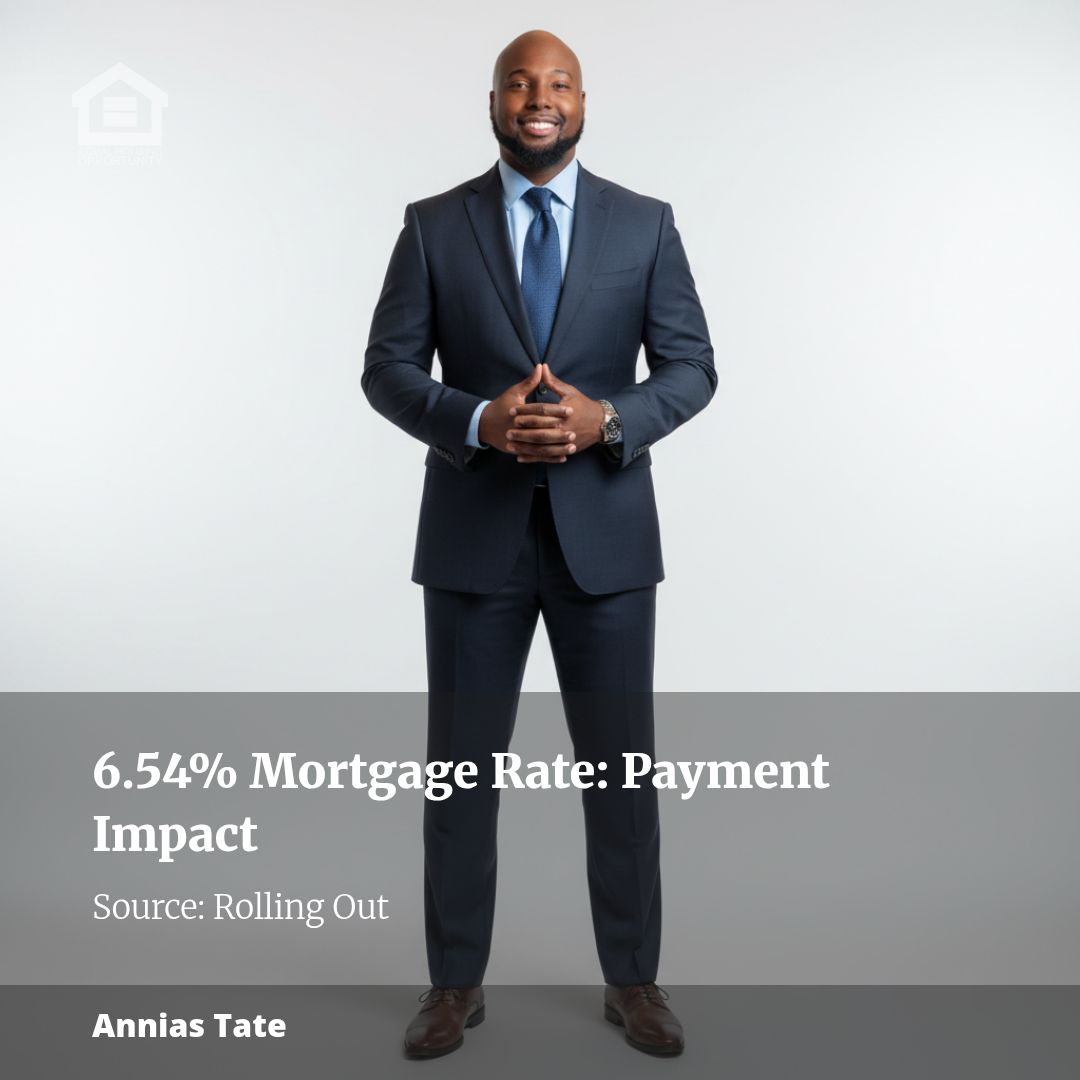
  • What today’s 6.54% mortgage rate means for your payment?

    What today’s 6.54% mortgage rate means for your payment?

    Current average 30-year fixed mortgage purchase rates are slightly lower (6.54%) than refinance rates (6.59%). VA loans offer the lowest rates and often no down payment. A $300,000 loan at 30 years costs about $1,935 monthly with $396,000 interest, while a 15-year loan costs $2,537 monthly but saves interest to $157,000. Rates depend on credit, down payment, and location. Rate locks don’t drop if market rates fall unless a float-down option is purchased. Refinancing should be based on savings outweighing closing costs.

    Continue to full article

  • Happy Labor Day! | Schedule a meeting today! https://calendar.app.google/DxNYdmSBXLTQXraFA

    Labor Day in the United States celebrates the contributions of workers everywhere, while also unofficially marking the final big summer weekend before fall takes over.
    It’s known for backyard barbecues, road trips, and that classic tradition of buying things you didn’t know you needed because “it’s on sale.”
    Beaches, parks, and grills reach peak activity as everyone tries to squeeze every last drop of summer fun out of the long weekend.
    Happy Labor Day! Wishing you a fun, easygoing weekend filled with good vibes, great food, and absolutely no thoughts about Monday.

  • Can I get a Home Loan with Bad Credit?

    Can I get a Home Loan with Bad Credit?

    I’ve worked with borrowers from all walks of life, and one question I hear often is: Can you get a home loan with bad credit? The answer is yes—there are government-backed options designed specifically for those with less-than-perfect credit, offering flexible qualifying rules. Sometimes, a larger down payment or a co-signer can strengthen your application, though you should expect higher interest rates in these cases. From my experience in Arkansas and the Conway area, I always recommend taking some time to boost your credit and make sure your budget can comfortably handle homeownership before moving forward. Understanding your loan options is key to making the right decision.

    Continue to full article

  • Waiting until fall won’t make homes more affordable, but here’s what will

    Waiting until fall won’t make homes more affordable, but here’s what will

    In six years, the income needed to afford a median-priced American home has nearly doubled to over $120,000. Mortgage rates are expected to stay near 6.5% with home prices continuing to rise slowly, making waiting for a market drop unlikely to help buyers. Many overestimate down payment requirements; typical first-time buyers put down 6-9%, with low or zero down payment options available. Preparation and understanding true costs are key to affordability, not timing.

    Continue to full article

  • US Mortgage Rates Stay Near 7% | Schedule a meeting today! https://calendar.app.google/DxNYdmSBXLTQXraFA

    Current US borrowing costs stayed elevated, with the avg. 30-yr fixed mortgage near 7% and the 15-yr fixed near ~6% after recent moves.
    Experts expected limited relief soon, and a housing forecast saw 30-yr rates near mid-6% by late 2026, staying in low-6% territory through 2027.
    Short-term rate policy had stayed unchanged through 2026, while mortgage pricing tracked the 10-yr Treasury more closely, which recently held above 4.5%.
    The affordability takeaway was practical: don't wait only for meaningfully lower mortgages, because rates are one part of buying costs and supply still matters.
    Suggested ways to adapt included budget-testing payments, exploring condos or fixer-uppers, considering 15-yr loans, and using rate buydowns when monthly costs fit.

  • Assumable Mortgage vs Refinance After Divorce | Schedule a meeting today! https://calendar.app.google/DxNYdmSBXLTQXraFA

    For divorcing US homeowners, assuming an eligible mortgage was often the simplest, lowest-cost path to sole ownership, keeping current terms and avoiding a new loan.
    In the current high-rate market, replacing an older mortgage could raise housing costs sharply; one example moved from ~4% to mid-6%, lifting payments to ~$1.4K.
    Assumption was not universal: only certain government-backed loans typically allowed it, covering about one-fifth of US mortgages, and the remaining spouse still needed lender approval.
    If assumption or refinancing did not fit, couples could sell and split proceeds, arrange a buyout, or delay changes so one spouse stayed temporarily.
    The decision depended on who kept the home, how payments would work, and each spouse’s long-term goals, with financial advice potentially clarifying best fit.

  • US Bad Credit Home Loan Paths | Schedule a meeting today! https://calendar.app.google/DxNYdmSBXLTQXraFA

    Buying with bad credit is possible in the US, but choices narrow. Government-backed loans and bigger down payments can improve approval odds.
    Recent credit data showed US mortgage holders averaged a 711 score, with ~2 in 3 landing between 661 and 850 currently nationwide.
    Many lenders look for ~620 on conventional loans. Government-backed paths may work below that, especially when borrowers can bring more cash upfront.
    Some government-backed loans allow small down payments with stronger credit, while lower scores can require ~10% down; veteran-focused options may allow no down payment.
    To strengthen approval chances, save more down payment, keep debt-to-income at ~36% or less, check credit reports, lower card use, and pay on time.
    Before proceeding, compare a few preapprovals within 14 days, and walk away if payments top ~30% of income or terms strain savings.